
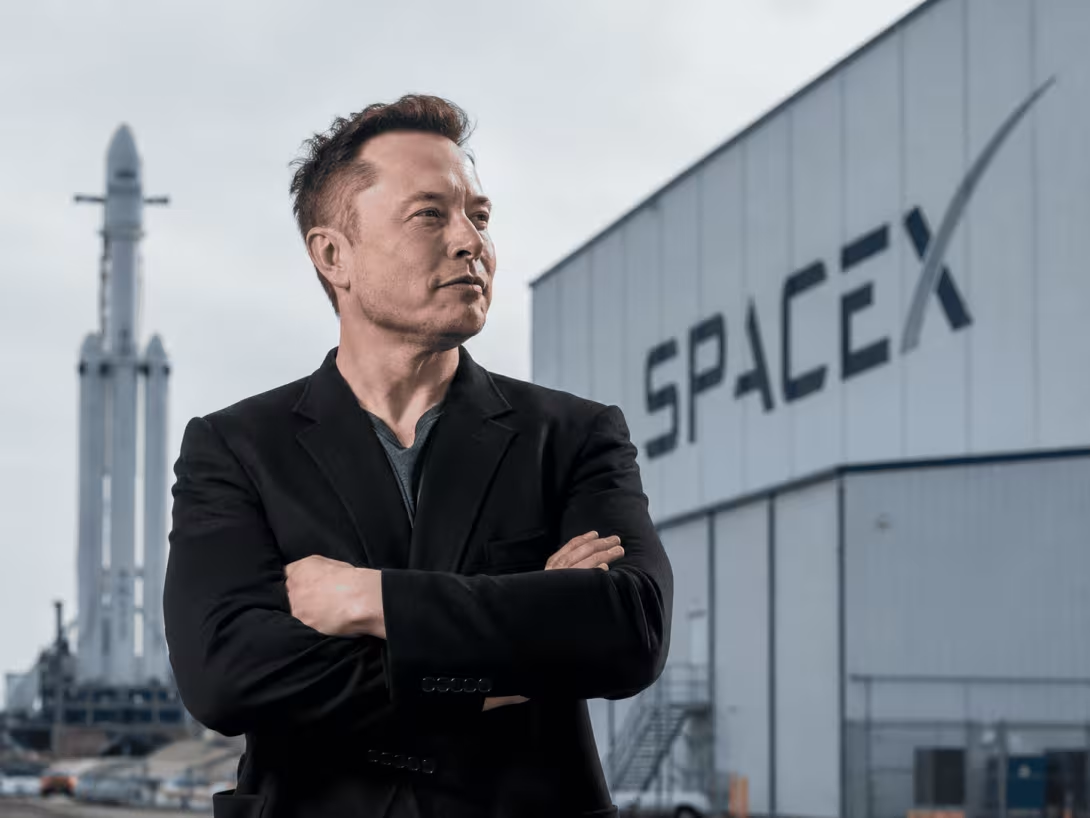
SpaceX made a spectacular entrance into public markets, delivering one of the most significant stock market debuts in history. The aerospace giant raised a record-breaking $75 billion through its initial public offering and closed its first day of trading nearly 19 percent above its offer price. Investor demand reached extraordinary levels, pushing the company's valuation beyond $2 trillion and bringing Elon Musk closer than ever to becoming the world's first trillionaire. The listing also triggered policy adjustments among major index providers, reflecting the unprecedented scale of the offering and its potential impact on global equity markets.
SpaceX Delivers a Historic Nasdaq Debut
SpaceX officially began trading on the Nasdaq on Friday under the ticker symbol SPCX, marking a milestone not only for the company but also for global financial markets. The stock closed its inaugural trading session at $160.95 per share, representing a gain of approximately 19 percent from its IPO price of $135 per share. The strong debut reflected intense investor enthusiasm from the opening bell. Shares started trading at $150 and continued climbing throughout the day, reaching an intraday peak of $176.52 before giving back some gains prior to the close. The momentum did not end when regular trading concluded. Following Nasdaq's closing bell ceremony, which featured SpaceX executives, the stock gained an additional 3.5 percent in after-hours trading, reaching approximately $166.76 per share. That performance lifted SpaceX's market capitalization to nearly $2.2 trillion, immediately placing the company among the world's most valuable publicly traded corporations.
A Record-Shattering $75 Billion Initial Public Offering
The company's market debut followed an IPO of unprecedented scale. SpaceX priced its offering on Thursday evening at $135 per share and successfully sold all 555,555,555 shares available in the transaction. The offering generated approximately $75 billion, making it the largest initial public offering ever completed. The deal eclipsed the previous global record held by Saudi Aramco, whose 2019 public offering raised approximately $29.4 billion. In effect, SpaceX's fundraising effort was more than double the size of the previous benchmark. Leading the transaction were Wall Street banking giants Goldman Sachs and Morgan Stanley. Underwriters also secured a greenshoe option covering an additional 83.3 million shares, which could potentially raise another $11.25 billion if fully exercised. The success of the offering highlighted the enormous appetite among investors for exposure to one of the most influential private companies to enter public markets in recent decades.
Investor Demand Reaches Extraordinary Levels
The remarkable first-day performance was underpinned by exceptional investor demand throughout the IPO process. According to reports, total orders for the offering approached $250 billion, nearly four times the amount of stock available for purchase. Such demand is rarely seen in global equity markets and underscored the confidence investors have in SpaceX's long-term growth prospects. The overwhelming interest reflected optimism surrounding the company's leadership position in commercial space launches, satellite communications, aerospace innovation, and future space-related technologies. Demand far exceeded supply, creating a powerful imbalance that contributed significantly to the stock's strong debut performance.
Elon Musk Inches Closer to Becoming the World's First Trillionaire
The IPO also had major implications for Elon Musk's personal fortune. Prior to the listing, estimates placed Musk's net worth at approximately $970 billion, with the vast majority tied to equity ownership in his various companies. Musk reportedly owns around 6.4 billion SpaceX shares. Based on recent valuations, analysts previously estimated that his SpaceX holdings alone could be worth roughly $830 billion. When combined with his substantial stake in Tesla and other business interests, the value created by SpaceX's public market debut places Musk on the verge of becoming the world's first trillionaire. Following Friday's trading activity, several market observers noted that the historic milestone appears closer than ever.
Index Providers Move Quickly to Accommodate SpaceX
The sheer size of the SpaceX IPO forced major index providers to reconsider how large newly listed companies are incorporated into widely followed benchmarks. Ahead of the listing, MSCI confirmed that it would utilize existing provisions allowing exceptionally large IPOs to gain accelerated entry into its Global Standard Indexes. FTSE Russell went a step further by modifying its rules to allow mega-cap companies to join Russell indexes after only five days of public trading. The change was designed specifically to address the challenges posed by listings of extraordinary size and significance. These adjustments demonstrate how the emergence of massive privately held companies is reshaping traditional market practices.
S&P Dow Jones Maintains Its Traditional Requirements
Unlike MSCI and FTSE Russell, S&P Dow Jones Indices chose not to alter its existing framework. The index provider rejected proposals that would have created a fast-track process for mega-cap IPOs seeking entry into the S&P 500. As a result, SpaceX must still satisfy the index's established eligibility criteria, including a 12-month seasoning requirement and compliance with GAAP profitability standards. The decision highlights S&P's commitment to maintaining consistency in its methodology despite the unprecedented scale of the SpaceX listing.
Retail Investors Receive Unprecedented Access
One of the most distinctive features of the IPO was the company's approach to retail investor participation. SpaceX allocated approximately 30 percent of the offering to retail investors, a figure dramatically higher than the traditional allocation range of 5 percent to 10 percent typically seen in major IPOs. The move allowed individual investors to participate more meaningfully in one of the most highly anticipated public offerings in modern market history. The unusually large retail allocation also broadened the shareholder base and contributed to the widespread excitement surrounding the listing.
A Landmark Event for Global Markets
SpaceX's public debut delivered a combination of record-breaking fundraising, extraordinary investor demand, and a valuation exceeding $2 trillion. The company raised $75 billion, shattered the previous IPO record, generated approximately $250 billion in investor demand, and finished its first trading day nearly 19 percent higher than its offer price. At the same time, the listing accelerated discussions surrounding index inclusion policies, retail investor participation, and the growing influence of mega-cap technology companies on global financial markets. For investors, the debut represents more than just a successful IPO. It marks a defining moment in capital markets history and underscores the enormous investor appetite for companies operating at the forefront of technological innovation and long-term economic transformation.
- Log in to post comments